Who am I?
My name is Jeffery Keith "Jeff" Skilling, I'm 42 years old, and I am the CEO of the world's 7th largest most valuable company Enron. I was born in 1953 in Pittsburgh Pennsylvania. I have two sons and one daughter and am divorced from their mother Susan Long in 1997. I went to Harvard law school and have two degrees. I received a scholarship to Southern Methodist University where I initially studied engineering but I changed to business. After graduation I worked for Houston bank which led me to go study at Harvard school of Business. I became a consultant for McKinsey AND one of their youngest! And do you know why? Because I'm fucking smart.
What time is it?
Scene 1: It's 6:45pm, the party started at 6 giving everyone enough chance to stop working and get down to the 3rd floor. I arrive late because long story short I didn't want to come.
Scene 2: It's 9:30pm, It's a starry night, It's calm and I can hear the hum of dormant computers.
Scene 3: It's 11:45am, Lay wanted to get this meeting in before lunch I guess, it's a warm summer day and I'm slightly perspiring.
Scene 4: It's 3:30pm, I'm taking half an hour out of my day to go gym work but I'm still fitting in my meeting with Andy.
Scene 6: It's 4:00am, I should be sleeping, perhaps I might be dreaming, I speak to my daughter.
Scene 7: It's 2:15pm, I should really be going over some earnings reports but I'm taking some time out to watch the finical news, it makes me happy.
Scene 8: It's 7:30pm after hours, I probably should be on my way home but there are more important matters at hand.
Scene 9: It's 11:50pm, new years eve is upon us, it's a slightly windy night.
Scene 10: I'ts 5:00pm, it's surprisingly cold evening.
Where am I?
Scene 1: An office party, 3rd floor.
Scene 2: My office.
Scene 3: Lay's office.
Scene 4: The in house gym, specifically the tennis court area that I've cleared in order to do shuttle runs.
Scene 6: I'm in my apartment, in my bedroom, the one where my family doesn't live.
Scene 7: I'm in my own office.
Scene 8: I'm Andy's office.
Scene 9: I'm on the roof of Enron's building. Then Lay's office.
Scene 10: I'm in Andy's office that has some how transformed into something I hadn't seen before.
What surrounds me?
Scene 1: Other colleagues, glasses of champagne, office appliances that have been pushed aside to make room for the employees,
Scene 2: Claudia Roe, papers from the previous working day, my computer, a few articles of clothing that were removed during our relations.
Scene 3: Lay, Claudia and the table around which were having the meeting.
Scene 4: Gym apparatus, my water bottle, a stop watch, an industrial sized fan,
Scene 6: My Daughter... and that's it.
Scene 7: The TV monitor which is displaying the financial news, my upgraded office with multiple desks, earning reports sheets, telephones, a fax machine a button that pages my assistant. Claudia is here also.
Scene 8: Andy Fastow; it's less well lit than all the other offices, filing cabinets, papers upon papers, a desk, a lamp
Scene 9: My employees, a film crew, a very attractive reporter, then attractive congresswoman and Lay, plus her office which is surprisingly empty.
Scene 10: These weird creatures, paper everywhere, Andy but he seems different, there's a tense atmosphere.
What are my relationships to the things around me?
Scene 1: I don't dislike my colleagues, they just frustrate me because they don't understand the idea. I'm not much of a drinker but the champagne is a good boost of confidence.
Scene 2: Claudia is a challenge, she is an intellectual equal, she's brilliant attractive and I was in love with her. Turns out she was just stringing me on for the power trip and that makes me feel so insignificant and now I know I must destroy her or at least take her down a few pegs.
Scene 3: Lay holds the key to my future, all the power to make the changes I want and the only thing that stands between me and my dream is Claudia and I will stop at nothing to make sure that doesn't happen.
Scene 4: Andy
................................................................................................................................................................
What do I want?
Scene 1: I want my colleagues to understand the power mark to market has and how my idea can completely change the way this entire company works, I want to validate my choice of joining this company, I want to prove to everyone that I am the real deal, the smartest guy in the room, the person that's gonna change the whole world. I want everyone to listen and understand!
Scene 2: I want Claudia to run away with me, I want her to fit into my puzzle, I want her to love me for real, I want her.
Scene 3: I want to win, I want to out-do Claudia, I want Lay to understand my vision, I want the position of CEO, I want to change the world, I want to put my stamp on this planet, I want to make use of every second of time I have on this Earth.
Scene 4: I want to test my power, I want to find out what Andy is made of, I want to find out whether Andy is strong enough. I want to show everyone that I am the strongest.
Scene 6: I want to connect with my daughter, I want her to love me, I want her forgiveness, I want to freeze her in time.
Scene 7: I want Claudia to know that I've won, I want to celebrate our stock price, I want to forget that things are going, I want to show off my success.
Scene 8: I want help, I want some to solve my problems, I want someone to share this massive pressure on my shoulders.
Scene 9: I want our stock price to remain high, I want to turn our loses into innovations.
Scene 10: I want Andy to explain what's going,
What's in my way?
Scene 1: My colleagues ignorance/incompetence.
Scene 2: Claudia's power game that doesn't feature me as an end result.
Scene 3: Claudia's dream and vision, her relationship with Lay and her lack of trust in my new ideas and the lack of shared experience we have.
Scene 4: Andy's obsession with me that puts up a guard to the real him.
Scene 6: My attention span and the neglect I have subjected her to over the years.
Scene 7: Claudia's blocks and her strong will.
Scene 8: My own Darwin principles, my perfection complex that makes it difficult to admit that I'm struggling and need help.
Scene 9: People giving me problems and not solutions.
Scene 10: Andy's become his own person and might be breaking away from my control.
What am I going to do to get what I want?
Scene 1: Explain it to them, simplify, take it down to the level, impassion the people, give them the drive to work hard for success, make them realise that we are only mortal and we should be rewarded for our brilliance now.
Scene 2: Tell her that I'm leaving my wife, try to stop playing her game and make her start playing my game.
Scene 3: Bare my soul to Lay, show her all my cards, inspire her imagination give her nostalgia about her own past.
Scene 4: Test Andy's physical endurance, push him to his extreme, break him down and then build him back up in my own image.
Scene 6: Show her my world, find common ground, find the midway between money and her childishness.
Scene 7: By flaunting my power in front of her and when she tries to rebel shut her down by showing her the harsh truth of her position within the company.
Scene 8: Pushing myself to admit the truth, letting my own wall down, breaking the facade just long enough for someone else to see that I can't do this alone.
Scene 9: Turning what could be seen as unsuccessful into the next big thing by going invented a new industry.
Scene 10: Watch Andy's moves closely, let him take control of the room, take a back seat.
Monday, 21 November 2016

Contextual Video
What have I learnt that will help me effectively play Skilling?
1. Jeffery operated his company on "Darwinian Management" (relates to treadmill scene). This means he would not accept failure from his employees or himself. I feel like this is a psychological flaw within the character of the play. He won't go to the authorities, he finds it almost impossible to ask Andy for help. When I'm in role as Skilling I believe his mind constantly firing trying to come up with solutions to problems all the time (which must be exhausting). He must be seen as the Alpha male so any signs of weakness must be covered up at all times.
2. Born in Pittsburgh in 1953, he would've been a teenager during the 60's, a time of radical change, reform and new ideas. He grew up in a world that was rapidly changing and capitalistic values would have most likely been embedded in him since birth. He studied at the Southern Methodist University and got his BA in Science then went onto Harvard. This may have been where his Darwinist view of society stems from.
3. Jeff was an "abstracts man" just like Fastow, maybe that is why he chooses to confide in him about the fact Enron isn't making any money. Perhaps he views Fastow as one in the same even if he is a little bit unconvential he still has that same in built survival of the fittest methodology AND a mind that can conceptualise new industries and formulate problems to complex solutions.
Enron Timeline
1985 - ENRON is created through the merger of Houston Natural Gas and InterNorth, forming the largest gas pipeline company in the USA with 37,000 miles of pipe.
1989 - Jeff Skilling, former senior partner at McKinsey & Company, joins ENRON.
1990 - Jeff Skilling hires Andrew Fastow as a manager of the ENRON Finance Corporation.
1994 - Congress submits to significant lobbying from ENRON, among others, to deregulate the electricity market. This allows the company to engage in electricity trading at market rates.
1996 - Jeff Skilling becomes No.2 at ENRON as its new President and Chief Operating Officer. ENRON’s workforce has risen in six years from 200 to 2000 and revenues have increased from $2 billion to $7 billion.
1998 - Andrew Fastow is promoted to the post of ENRON’s Chief Financial Officer. Meanwhile, the company loses large amounts of money by attempting to enter the water business and trying to expand into Brazil.
2000 - California is blacked out on numerous occasions as a result of an energy crisis. Electricity is in short supply and prices soar. ENRON is accused of partly stage managing the crisis in order to boost profits.
Dec 2000 - ENRON’s share prices rocket to their highest ever level, $84.87. This makes the company America’s seventh most valuable company.
Nov 2001 - ENRON revises its financial statements for the past five years. Instead of the significant profits previously posted, it has lost $586 million
1986 - Kenneth Lay is named Chairman and CEO of the new company. As Chairman and CEO of Houston Natural Gas, he has helped to orchestrate the merger.
1990 - Jeff Skilling hires Andrew Fastow as a manager of the ENRON Finance Corporation.
1994 - Congress submits to significant lobbying from ENRON, among others, to deregulate the electricity market. This allows the company to engage in electricity trading at market rates.
1998 - Andrew Fastow is promoted to the post of ENRON’s Chief Financial Officer. Meanwhile, the company loses large amounts of money by attempting to enter the water business and trying to expand into Brazil.
1999 - The Board of ENRON waives its conflict of interest rules so that Andrew Fastow can run private partnerships that will do business with ENRON. Fastow creates the first of these, LJM, which, under a smokescreen of legitimacy, hides the debts of ENRON.
Oct 2001 - ENRON reports a third-quarter loss of $618 million.
Nov 2001 - ENRON revises its financial statements for the past five years. Instead of the significant profits previously posted, it has lost $586 million
Dec 2001 - After an aborted merger attempt by Dynegy, ENRON files for Chapter 11 bankruptcy protection.
2004/2006 - Following lengthy investigations, in which Andrew Fastow offers key evidence, ENRON’s former Chief Financial Officer accepts a ten year jail sentence as a result of plea bargaining. At the end of their trials, Kenneth Lay is convicted on the six counts against him and Jeff Skilling is convicted on 19 of the 28 counts that he has faced. Kenneth Lay dies of a heart attack and his sentence is therefore abated. Jeff Skilling is sentenced to 24 years and 4 months in jail and fined $45 million. He is currently serving his sentence in Littleton, Colorado. The US Supreme Court has agreed to hear Skilling’s appeal in early 2010
Source: Enron Education Pack
Animal Study: Mice
Breath
Mice have very small respiratory systems, this means they breathe very hard and fast in order to get oxygen into their bodies; Watching videos some mice have constant pumping/thrusting motion all the time. Mice breathe out of their noses and rarely open their mouths for air. I have found this by expanding and contracting my diaphragm in quick succession.
Rhythm of life
Fast and slightly frantic. Always on the look for a predator approaching whilst simultaneously looking for food. Laban effort: flick - changes focus within half a second. A mouse will be constantly on edge, they are definitely flight and not fight and will assess a situation and then react instantly by probably running away.
Centre of Gravity
A mouse's centre lies in it's four paws, they move around with a wide surface area contacting the floor and equally spread their body weight between their four legs.
Spine
Some species of mice have a slightly undulating spine that curves upwards creating a bump in the back. This creates a more arched position when they move around. It slightly moves up and down when they move disappearing and reappearing depending on the speed of their movement.
How it views the world
Everything is huge for a mouse, a blade of grass can be bigger than it's entire body, when a mouse looks upwards it sees everything towering down on it, every creature is bigger than it and a mouse is prey to many different animals. Mice see the world through two lenses, a survivor and a scavenger. Mice don't take down other animals and eat them they take whatever they can whenever it is available. Mice live day to day never thinking about the future only about what is right in front of them.
Sunday, 20 November 2016
Session analysis

When we first entered the room there was loud dub-step music playing. At first I didn't really take any notice of it however the conversation I was having was effected. We had to speak louder and what we were speaking about became slightly more exciting. On further inspection I realised it was actually making me pumped for the work ahead. The pulsating beat and the heavy bass was affecting my inner rhythms. When we had to discuss the way the music made us feel it was very apparent that everyone had similar feelings towards the music. We can definitely utilise this feeling to invite the audience into this world of business and high risk we are creating. In every single scene the stakes are high and in order to make the audience buy into it we need to create a fully formed world. This can be done through using the 5 senses. The sight box will be ticked with our set and costumes for sure, the music will cover the sound and touch I feel especially if we blast the music they'll be able to feel it inside of their bodies. Simply by entering the room I could already begin to see the world we will be making over the common ground season.
Warming up with ninja
 We played a game of "Ninja" in order to get our bodies warm and ready for physical work. This was a slightly successful exercise. In my opinion half of the cast through themselves into and truly committed to the moment, without hesitation or questioning the exercise, whereas some people held back and didn't fully go with what was happening. We need to isolate this as a problem and solve it before we go on to make work that goes into the show. It was exciting to watch a string of ninja strikes especially when people were taking risks however when the action dropped it became very apparent. I feel like this could be a metaphor for Enron. If we manage to have a full play of non-stop committed action we will be successful.
Mice
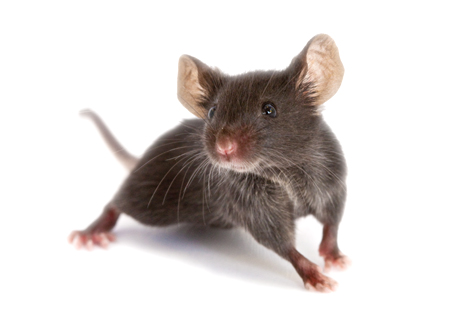 Our directors vision for the opening of the play is for a group of mice to be moving around the space, discovering "business clothes" and slowly dress in them and become more human until they are fully dressed. We started off by exploring how mice would move across a space, interact with other mice and simply cross a room. We paired this exercise with music to give it a more frantic intention. Through this experimentation we found different base movement that we could use for the actual production. We made decision like knees should never touch the floor and there should always been an on edge sort of feeling. In order to improve this work it is vital for whoever takes part in this section to do an animal study to deepen their understand on what it is to embody the physicality of a mouse. In another post I will complete my own study using YouTube clips and my own experimentation.
 Expectations
I have very high expectations from every aspect of this production. I have high expectations from myself to take risks and make bold choices from the word go, to get off book as soon as possible in order to aid a smooth rehearsal process and find the best choices without a script in my hand. I expect myself to do in-depth and analytical research into the historical context of the play and a comprehensive, instinctual and intellectual interpretation of my character. However I expect just as much from my cast mates. I want to be able to work in a room where I feel supported and able to just through myself into everything and someone will be there to catch me. I expect everyone to be giving 100% of their effort into telling their part of the story no matter the size or shape. The play will only be as strong as the ensemble we create and as long as we are connected to the play anything will be possible.
Raptors
We did an interesting exercise here in partners we had to mould each other into shapes personifying greed. This was to inform the shape and movement of the "Raptors" that appear in the play. The directors vision wants these to be metaphorical instead of literal dinosaurs. I like this choice because it adds a depth to the play that will (most likely subconsciously) read on stage. It was interesting seeing the different interpretations of greed as all boasted distinct characteristics but a lot of similarities cropped up too. There was a heavy laboured dynamic to the movement and a definite ugliness to the shapes. This was a useful exercise as it allowed us to connect physicality and elements of the play together to form our own unique interpretations. In order for this process to go smoothly we will need to be contributing like this all the time so we have a fully shaped piece through discovery and physical experimentation.
Being cast as Skilling
 When I found out I would be playing Jeffery Skilling in this production I was absolutely ecstatic, I felt like I had leaped over an obstacle and that I had been given an opportunity to play a role that takes complete and total transformation. This will be like a culmination of all the skills and techniques I've learnt over the past 3 years at BRIT. I will have some many sources to inform my characterisation; the real life Jefferey Skilling; the written character on the page and how the director sees this character within this production. I feel especially like this is a triumph as I traditional would not be cast in this role and that I am breaking a mould with this casting. I definitely feel a pressure with this role as well because many (if not all) of the boys audition for this role. So even people who are in my cast would want to be in my position. This makes me feel like their are going to be people out there wanting me to fail so they can say they would've done a better job. I have to acknowledge this and continue to give a good performance regardless and know that I don't have to "please" anyone.
Subscribe to:
Posts (Atom)